Bangladesh Institute of Journalism and Electronic Media (BIJEM)


Home

Executive Director

Governing Body

Advisory Board

Post Graduate Diploma

Training Courses

BIJEM's Success

Publications

Seminar

Resource Persons

Announcement

Facilities

Assistance & Guidance

Library

It Room

Prominent Personalities

Picture Gallery

BIJEM's Donor List

Press Coverage

Admission Form

Stundents Honor by BIJEM

Contact Us


Prologue: There can be hardly any denying that journalism is a unique discipline. No other professional course simultaneously offers knowledge, wisdom, vision, adventure, challenge and entertainment like journalism. The growing interest of Bangladeshi young men and women towards this profession has put tremendous pressure on the handful of public and private universities which offer degrees in this subject. It is in this backdrop that Bangladesh Institute of Journalism and Electronic Media (BIJEM) came into existence as the countries first ever journalism institute in the private sector.

Background:  Three public university, i.e. the University of Dhaka, Chittagong University and Rajshahi University offer honors and masters degree in journalism. Besides, several private universities like-Independent University of Bangladesh (IUB), Stamford University, University of Liberal Arts, East-West University (EWU), American International University-Bangladesh (AIUB) and Daffodil International University (DIU) have journalism department.  The University of Dhaka started its journalism department in 1962 by offering a diploma course; it was the first journalism department in this country. Later, this diploma course was terminated  and Masters in journalism was introduced.


Shamsuddin Haidar Dalim, News Presenter, Banglavision


In 1978, Honors was introduced which was the first under graduation journalism course in the indo-Pak subcontinent. The National University after quite long time decided to introduce Post graduate journalism course. In 2001, Press Institute of Bangladesh (PIB), an institute under the Ministry of Information, started its `Post Graduate Diploma in Journalism’ by taking the affiliation of National University. Besides this, Press Institute of Bangladesh (PIB), National Institute of Mass Communication (NIMCO), Bangladesh Centre for Development, Journalism and Communication (BCDJC) and Mass line Media Centre (MMC), News Network and some other NGO’s started operating short term courses in journalism to meet the increasing demand of time. However, public interest kept increasing over time-especially after the initiation of innovative and quality print and electronic media.

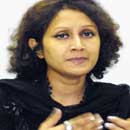
Samia Rahman, News Presenter, NTV

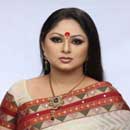
Dima Nefartity, News Presenter, ATN Bangla

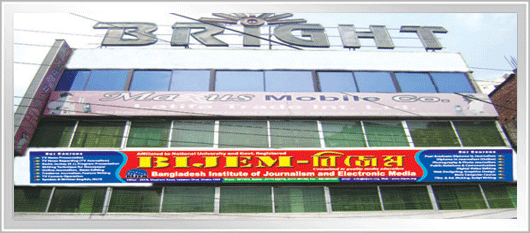
A drive need of an appropriate media institute in the private sector arose very justifiably and at last, with a now of cultivating state of the art education, Training, Research and Publication in the area of Journalism and Mass Communication. BIJEM’s journey started in the 1st and 2nd floor at a building in Elephant Road, Dhaka. Initially its name was Bangladesh Institute of Communication Studies and Public Relations (BICSPR) which changed into its present name (BIJEM) in September 2007. BIJEM is county’s first every media institute in the private sector and the only one which is affiliated to the National University. This new organization, by dint of its dedicated efforts in imparting innovative and up-to-date training on students, has earned tremendous repute at the national level regardless of government, semi-government and private sectors. Students trust is its strength; their reliability is its glory.

Dewan Sayeedul Hassan, News Presenter, BTV & Bangladesh Betar


BIJEM’S Objectives:

1.

To create skilled workforce through effective training in print & electronic media journalism, traditional media, public relations, film, drama, editing and publishing, advertising, information technology and so on.

2.

To encourage women-side by side men-in mass communication, journalism and media studies.

3.

To publish books and journals in all disciplines of mass communication and journalism.

4.

To arrange seminars, symposiums, workshops etc to create mass awareness and protect the interest of journalists and media activities.

5.

To work as consultants in the field of mass communication, journalism and media related issues.

6.

To motivate children for building careers in radio, television and print media-as well as develop their talents and skills through different courses.

Class room


Copyright © 2008 All rights reserved to BIJEM


free hit counters
free hit counters